Paper Works Until It Doesn’t
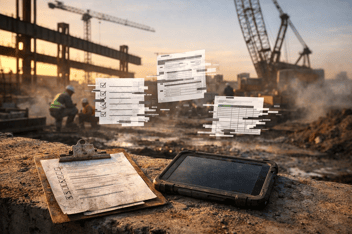
On most days, paper logs feel harmless. A clipboard gets passed around. Boxes are checked. A signature is added. Work moves forward and no one thinks twice about it.
Until something happens.
An incident. A near miss. A surprise audit. A request from an inspector or an insurance carrier asking for documentation. Suddenly, those paper construction safety inspections are no longer routine. They are evidence. And evidence does not get the benefit of the doubt.
This is where many safety programs quietly fail. Not because inspections were not done, but because they cannot be proven. Paper records that once felt sufficient start to fall apart under pressure. Pages are missing. Dates are questioned. Handwriting is unclear. Inspections that “everyone knows happened” suddenly look incomplete.
This is the moment when paperwork stops being a formality and becomes a liability.
Why Paper-Based Construction Safety Inspections Fail Under Pressure
Paper-based construction safety inspections assume ideal conditions in an industry that rarely offers them.
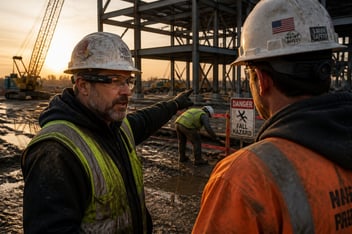
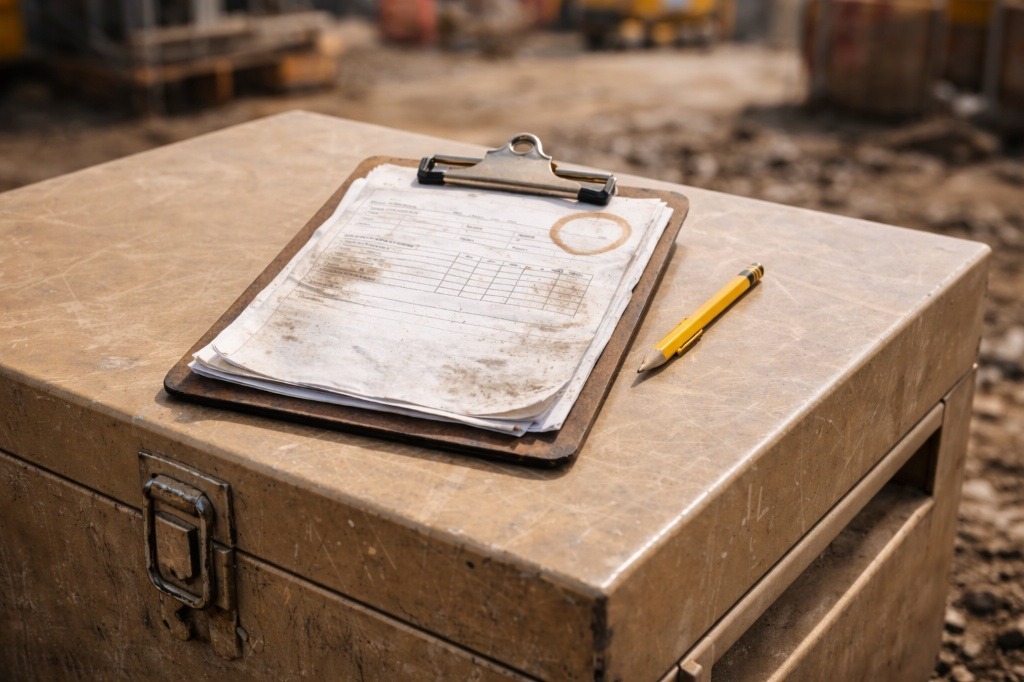
Jobsites are noisy, fast-moving, and unpredictable. Weather changes. Crews rotate. Schedules tighten. Under that pressure, inspections get rushed or completed later than intended. Forms get filled out at the end of the shift instead of before work begins. Clipboards live in trucks, trailers, or job boxes where records get damaged or lost.
Paper provides no way to verify reality. A checkbox does not show what conditions actually looked like. A signature does not prove when the inspection occurred. A handwritten date does not confirm whether hazards were identified before work started or reconstructed afterward.
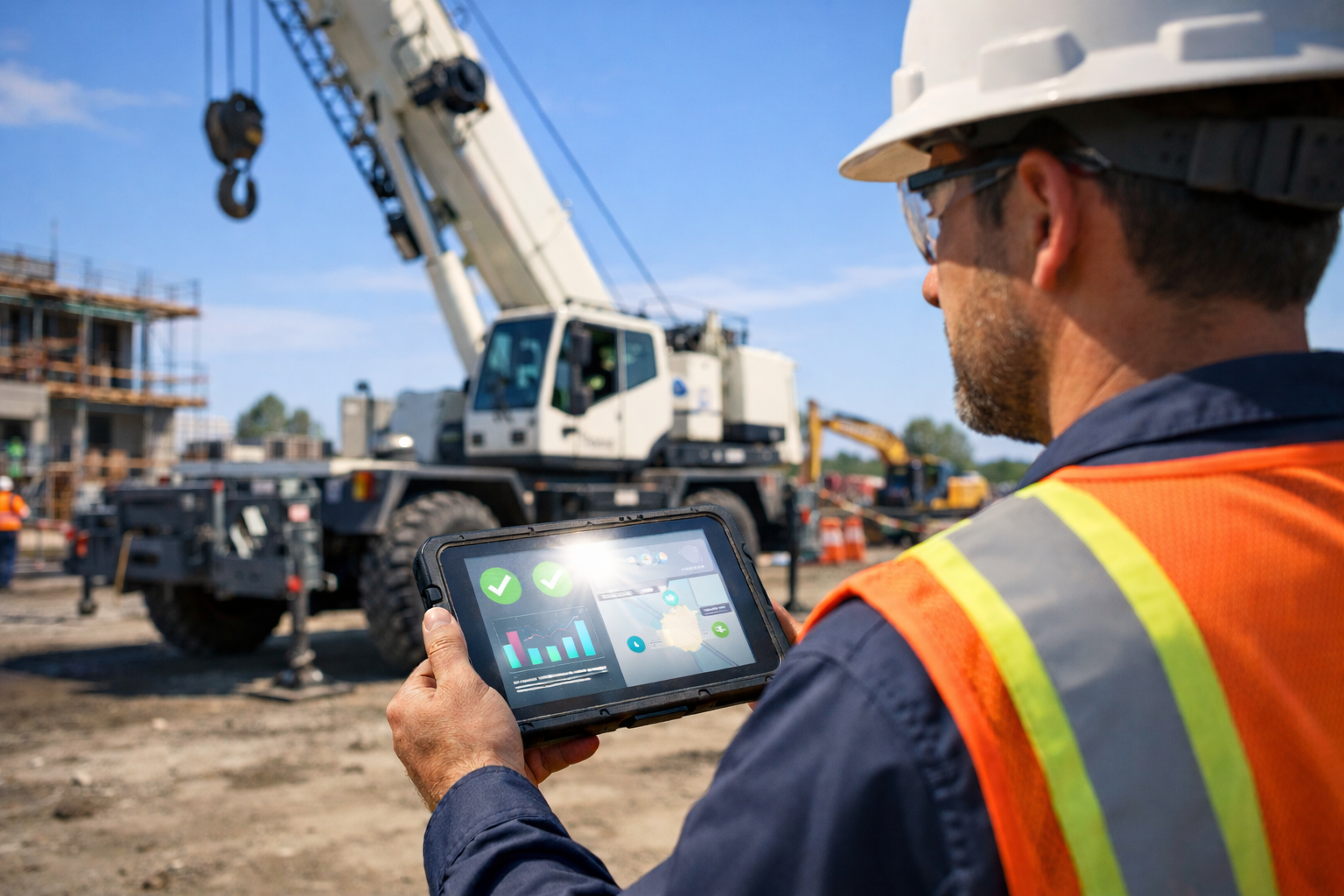
SafetyVue was built specifically to address this gap. Instead of relying on memory or manual discipline, SafetyVue captures objective, verifiable data at the moment inspections occur. Time, location, and site conditions are automatically recorded, removing ambiguity when pressure hits.
The Liability Gap Paper Logs Create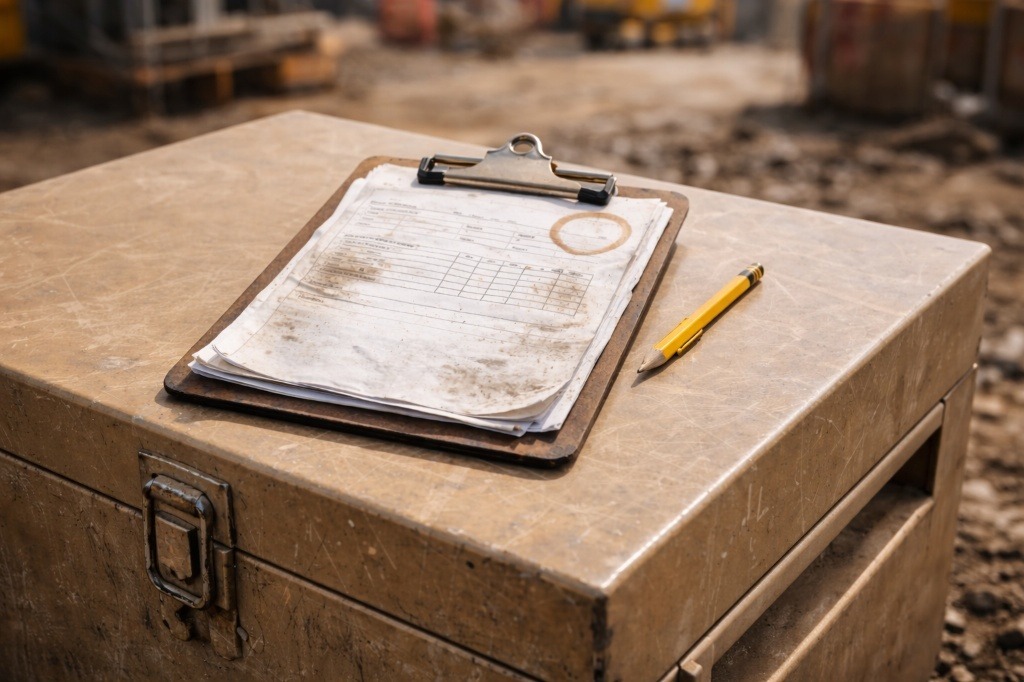
In audits, investigations, and courtrooms, intent does not matter. Proof does.
Paper construction safety inspections create a liability gap because they exist in isolation. They are disconnected from the equipment being used, the people on site, and the conditions at that moment in time. When records cannot be verified, they are easy to challenge.
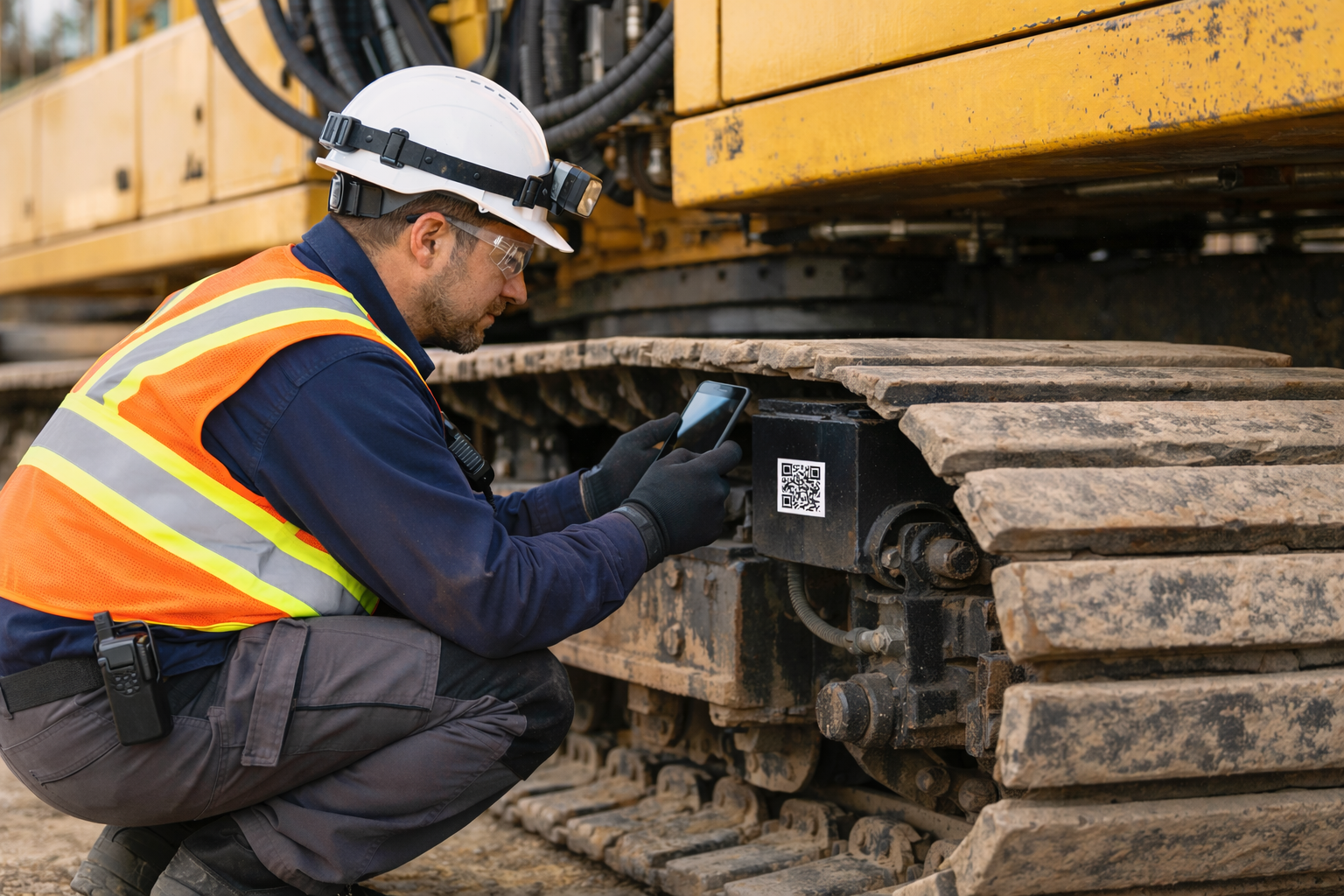
This is where SafetyVue fundamentally changes the equation. Inspections are not just forms. They are connected intelligence. Each inspection is tied to specific assets, specific workers, and specific locations. Photo evidence, GPS data, and timestamps are automatically captured and stored as part of an immutable record.
Instead of hoping paper holds up, companies can show exactly what was inspected, when it was inspected, and what conditions existed at that time.
When Construction Safety Inspections Put Licenses at Risk
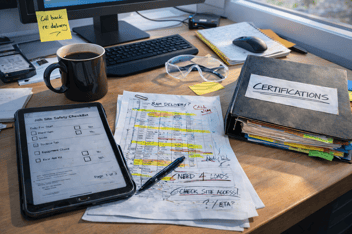
For operators, supervisors, and safety leaders, documentation is not abstract. Your name is on it. Your license depends on it.
When construction safety inspections are questioned, regulators do not just evaluate company policy. They evaluate individual responsibility. If documentation looks inconsistent or incomplete, it raises doubts. Over time, those doubts can lead to fines, suspensions, or license reviews.
SafetyVue helps protect licenses by creating a clear, defensible record of due diligence. Inspections are completed in the field, in real time, with objective proof built in. If questions arise later, operators and supervisors are not left relying on memory or paper that may not tell the full story.
Instead, they have evidence.
Paper Logs vs. Reality on the Jobsite
Paper inspections were designed for a slower, simpler version of construction. That version no longer exists.
Today’s jobsites demand flexibility, speed, and accountability. Yet paper-based construction safety inspections remain static. They do not adapt to changing conditions or connect safety data across the organization.
SafetyVue bridges that gap by capturing what is actually happening on site and connecting it across the safety ecosystem. Inspections are no longer standalone documents. They feed into a broader safety intelligence platform that links inspections to assets, personnel, training records, and incident history.
This means safety is no longer reactive. Patterns can be identified. Risks can be flagged earlier. Inspections stop being paperwork and start becoming prevention.
What Modern Construction Safety Inspections Must Prove
To reduce risk instead of creating it, construction safety inspections must do more than exist.
They must prove when the inspection occurred, where it occurred, and what conditions were present. They must show that inspections were completed before work began and that hazards were identified and addressed. They must stand up to scrutiny from regulators, insurers, and legal teams who assume documentation will be challenged.
SafetyVue was designed around this reality. Inspections are built to be audit-proof, not just complete. Objective data replaces subjective recollection. Verification replaces assumption.
From Paper Records to SafetyVue’s Connected Intelligence
Moving away from paper is not about convenience. It is about protection.
SafetyVue replaces disconnected paper logs with connected, defensible construction safety inspections. Inspections become part of a single source of truth where safety data is captured once and used many times. Instead of chasing paperwork, safety leaders gain visibility. Instead of reacting to incidents, they gain intelligence to prevent them.
This is the shift from recording the past to protecting the future.
If You Can’t Defend the Inspection, You Can’t Defend the License
Paper logs feel familiar, but familiarity does not equal safety. When incidents occur, construction safety inspections must stand up to real scrutiny.
SafetyVue exists to make sure they do.
If documentation cannot be defended, neither can licenses, bids, or reputations. Replacing paper with connected safety intelligence is no longer optional. It is how modern construction companies protect their people and their business.
Paper logs do not protect you in court. Connected records do.
Download the Connected Intelligence Playbook to see how crane, rigging, and steel firms replace paper inspections with audit-proof, defensible digital records.