

Construction companies today are navigating rising insurance premiums, labor shortages, and pressure to deliver projects on time and within budget. In this environment, a proactive safety program is no longer simply a regulatory requirement—it’s one of the most powerful financial levers available to a construction business.
Yet safety is still often viewed as a cost center. In reality, the ROI of construction safety is both measurable and substantial. When organizations reduce incidents, improve EMR, streamline administrative work, and leverage modern technology such as SafetyVue Mobile and SafetyVue AR, the financial returns far outweigh the investment.
This article breaks down the total ROI of a proactive safety program—and why companies embracing data-driven safety now are outperforming those that don’t.
1. Direct Financial Returns: Fewer Incidents, Fewer Claims

The High Cost of a Single Incident
Construction remains one of the most hazardous industries. According to the National Safety Council, the average cost of a medically consulted workplace injury is $47,500, while the average cost of a fatality exceeds $1.3 million
Beyond direct medical and workers’ compensation costs, companies face additional financial impacts:
- Lost productivity
- Project delays
- Legal fees
- Reputational damage
- Subcontractor disruptions
How Proactive Safety Reduces Incident Frequency
A proactive program focuses on leading indicators: observations, consistent communication, and rapid identification of hazards before they become injuries.
Tools such as SafetyVue’s Insights help identify patterns, predict risks, and drive better behaviors across the field workforce.
The ROI Impact
Reducing incidents by even a small percentage produces exponential returns across claims, downtime, and operational disruptions. For many firms, this is the single largest contributor to a high ROI of construction safety.
2. Lower Insurance Premiums Through EMR Improvements
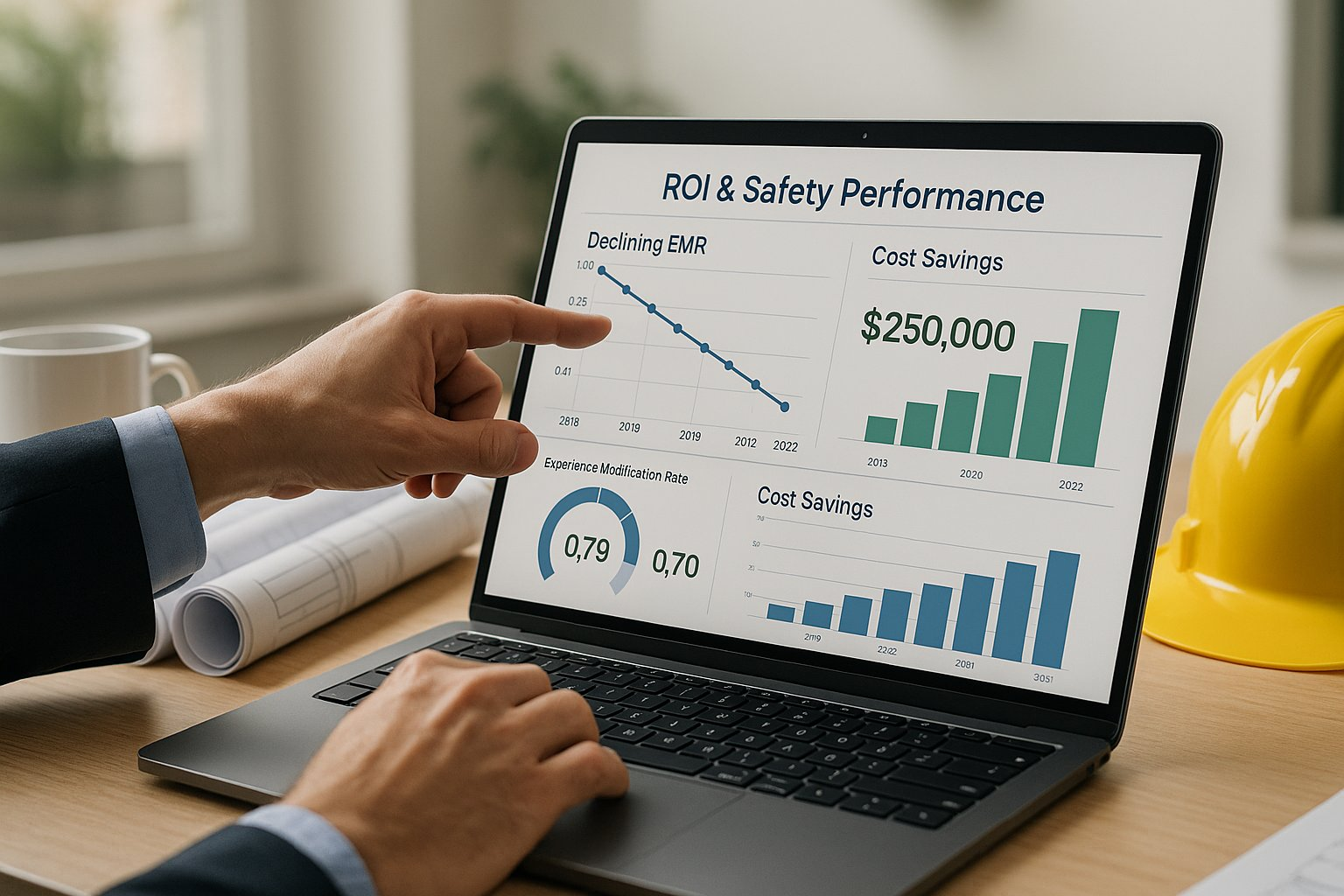
What EMR Means for Your Bottom Line
Your Experience Modification Rate (EMR) is one of the most direct financial indicators of safety performance. A lower EMR reduces workers’ comp premiums and increases competitiveness in bidding.
Even a 0.1 reduction in EMR can save a mid-size contractor tens or hundreds of thousands of dollars per year.
How Proactive Safety Lowers EMR
When companies reduce claims through leading-indicator activities, proactive reporting, and hazard elimination, their EMR naturally declines over time. Solutions like SafetyVue Mobile help ensure incidents are reported quickly and corrective actions are closed promptly—preventing costly repeat events.
The ROI Impact
Long-term EMR reduction is one of the most powerful sources of sustained financial return. Lower premiums → higher margins → more competitive bid rates.
3. Administrative Time Saved With SafetyVue Mobile
The Hidden Cost of Manual Safety Documentation
Superintendents and safety managers often spend hours each week on paperwork:
- Filling out inspection forms
- Compiling reports
- Entering data into spreadsheets
- Tracking corrective actions manually
These hours pull them away from the field and add unnecessary labor cost.
How SafetyVue Mobile Streamlines Workflows
SafetyVue Mobile digitizes safety inspections, observations, and reporting:
- Auto-populated forms
- One-click photo documentation
- Automated corrective-action workflows
- Instant data sync
Teams spend less time pushing paper and more time executing safety in the field.
The ROI Impact
If a superintendent earning $60/hour saves even 3–5 hours per week, the annual savings can exceed $10,000–$15,000 per individual. Multiply that across teams, and administrative efficiency becomes a major contributor to the ROI of construction safety.
4. Field Inspection Hours Saved With SafetyVue AR
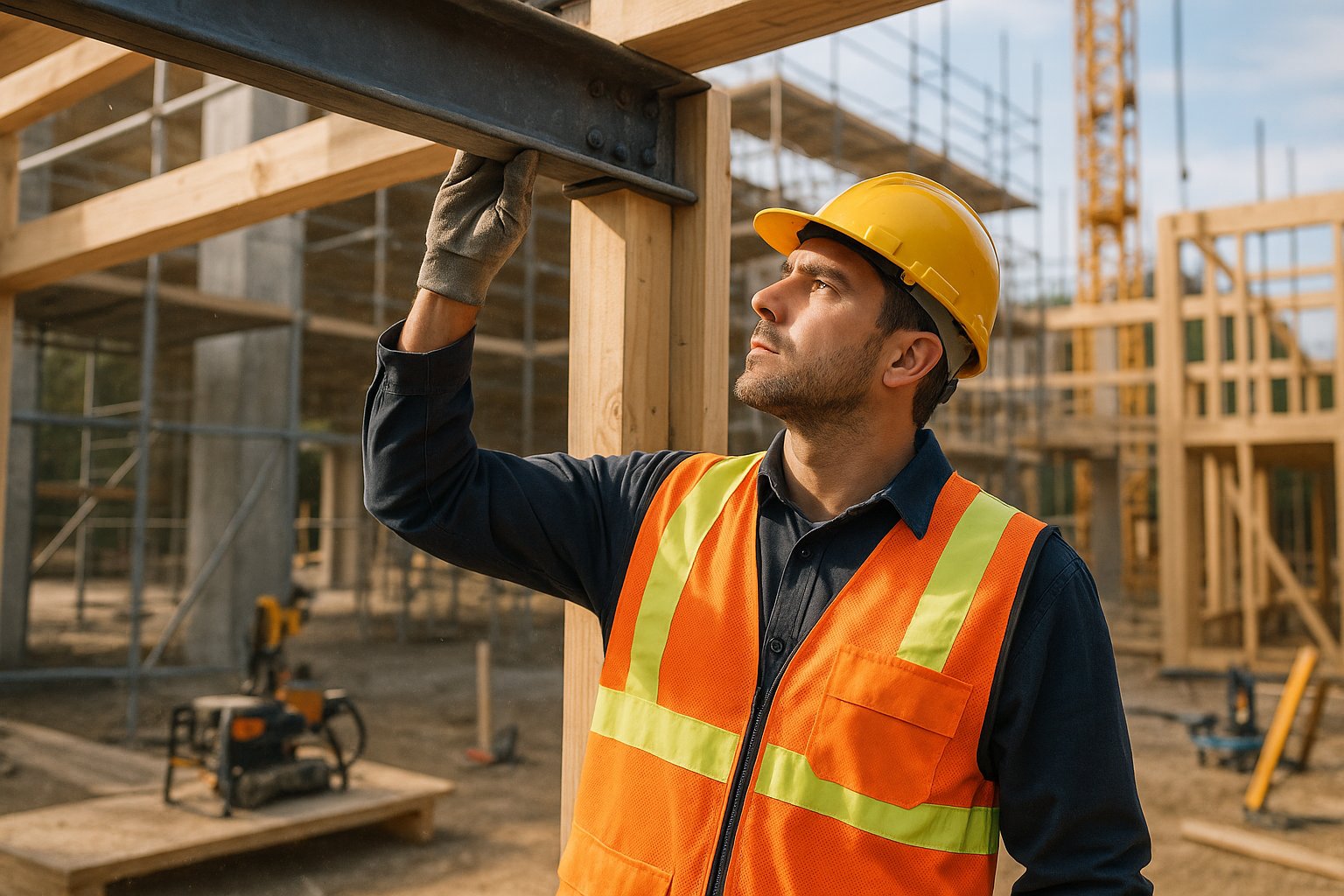
Traditional Inspections Consume Time and Resources
Most inspections involve long walks, manual note-taking, inconsistent reporting, and multiple follow-up site visits to validate corrections. It adds up quickly—particularly across multiple job sites.
How SafetyVue AR Accelerates Inspections
SafetyVue AR uses advanced visual AI to capture site conditions in minutes, automatically identifying hazards with precision and speed. Benefits include:
- Faster hazard identification
- Eliminated redundant site walks
- Reduced rework
- High-quality, consistent documentation
The ROI Impact
SafetyVue AR cuts inspection time significantly—often by 30–50%—which translates directly into reduced labor cost. Additionally, more frequent inspections at lower cost lead to earlier detection of issues, reducing incidents and boosting overall project performance.
5. Calculating the Total ROI of a Proactive Safety Program
To demonstrate how these components work together, consider the combined annual value of:
- Incident reduction savings: fewer claims and lower workers' comp costs
- Insurance savings: EMR improvements
- Administrative labor savings: faster reporting and corrective actions
- Inspection efficiency savings: fewer hours spent on site walks and documentation
When totaled, organizations often experience returns 5–10x higher than their initial investment in safety technology and training.
A proactive safety program is not an expense—it's a measurable financial strategy.
6. Conclusion: Safety as a Strategic Financial Lever
The companies that understand the ROI of construction safety are the ones positioning themselves for long-term success. Proactive safety programs deliver:
- Lower insurance premiums
- Stronger margins
- Higher productivity
- Fewer disruptions
- Greater competitiveness
Modern tools like SafetyVue Mobile and SafetyVue AR amplify these benefits with real-time data, faster workflows, and predictive insights.
Safety is no longer just about compliance—it’s about achieving a safer, more profitable future.