

A safety consultant walks a construction site, spots a problem near a crane operation, and tells the crew to stop work until conditions improve.
A week later, an incident occurs.
During litigation, attorneys begin asking uncomfortable questions:
- Who had authority on site?
- Who directed the work?
- Who approved corrective actions?
- Did the consultant effectively act as a controlling employer?
This is where many consultants get trapped.
In today’s construction and industrial environments, the line between “advisor” and “decision-maker” can blur quickly. Informal workflows, verbal approvals, and disconnected documentation often create the appearance of operational control, even when consultants never intended to assume it.
That is the core danger behind multi-employer worksite liability.
The good news is that structured workflows and clear documentation help protect consultant role boundaries. Companies like SafetyVue are increasingly focused on creating systems that improve visibility and accountability without replacing operational authority. The goal is simple: help experts stay experts, not accidental employers.
What is Multi-Employer Worksite Liability?
Under OSHA’s Multi-Employer Citation Policy, more than one company can be cited for the same hazard on a jobsite.
OSHA generally divides responsibility into four categories:
- Creating employer
- Exposing employer
- Correcting employer
- Controlling employer
The category that creates the greatest exposure for consultants is the controlling employer.
A controlling employer is typically defined as an entity with general supervisory authority over the worksite, including the power to correct safety violations or require others to correct them.
That definition sounds straightforward. In practice, it becomes complicated fast.
A consultant may believe they are simply offering recommendations. But if they routinely direct corrective actions, stop work, approve field conditions, or oversee compliance enforcement, they may begin to appear operationally responsible.
This is especially common on large construction projects, crane operations, steel erection sites, and industrial shutdowns where multiple contractors operate simultaneously.
Why Consultants Are Vulnerable
Most consultants do not intentionally assume employer liability.
The problem is that modern jobsites are chaotic. Communication often happens through:
- Text messages
- Phone calls
- Verbal instructions
- Whiteboards
- Informal field conversations
- Paper inspection forms completed after shifts
When responsibilities are unclear, legal exposure expands.
A consultant may:
- Participate in daily safety meetings
- Review lift plans
- Recommend corrective actions
- Inspect equipment
- Document hazards
- Communicate directly with crews
Individually, these actions seem harmless. Collectively, they can create the appearance of control.
And once an incident occurs, every interaction becomes evidence.
How Consultants Accidentally Become the “Controlling Employer”
The biggest problem is not usually bad intent.
It is bad process.
Many jobsites still operate with fragmented safety systems and disconnected records. SafetyVue’s industry research highlights how companies continue relying on paper inspections, spreadsheets, whiteboards, and delayed reporting that create major liability gaps.
Consider a common scenario:
A subcontractor asks a consultant:
“Can we proceed with this lift?”
The consultant responds:
“Looks fine to me.”
That single sentence may later be interpreted as operational authorization.
The same thing happens when consultants:
- Sign off on field conditions
- Approve corrective actions
- Direct workers
- Authorize equipment use
- Control shutdown decisions
In court, wording matters.
So does documentation.
If responsibilities are vague, attorneys will argue that authority existed whether formal contracts say so or not.
Documentation Is Where Liability Expands
After an incident, investigators rarely focus only on the hazard itself.
They focus on authority.
Specifically:
- Who knew about the risk?
- Who documented it?
- Who had authority to act?
- Who directed the response?
- Who verified corrections?
If the records are incomplete or inconsistent, consultants can become easy targets.
This is one reason the industry is moving toward audit-ready digital documentation. SafetyVue’s broader positioning emphasizes objective field records, connected data, and immutable documentation designed to prove due diligence in the field.
The legal reality is simple:
If a safety action was not clearly documented, opposing counsel may argue it never happened.
The Hidden Risk of “Helpful” Consulting
Many consultants cross liability lines because they genuinely want to help.
That creates a dangerous gray area between recommendation and operational control.
There is a major legal difference between:
- “I recommend suspending this lift due to wind conditions.”
and
- “You are cleared to proceed.”
One preserves advisory status.
The other can imply authority.
The challenge is that fast-moving jobsites often pressure consultants into operational decision-making, especially when owners, contractors, and supervisors rely heavily on their expertise.
This risk is becoming more significant as “nuclear verdicts” continue rising across industrial and construction litigation. SafetyVue specifically highlights how incomplete records and fragmented safety documentation can become major liabilities during legal proceedings.
How Structured Workflows Protect Consultant Role Boundaries
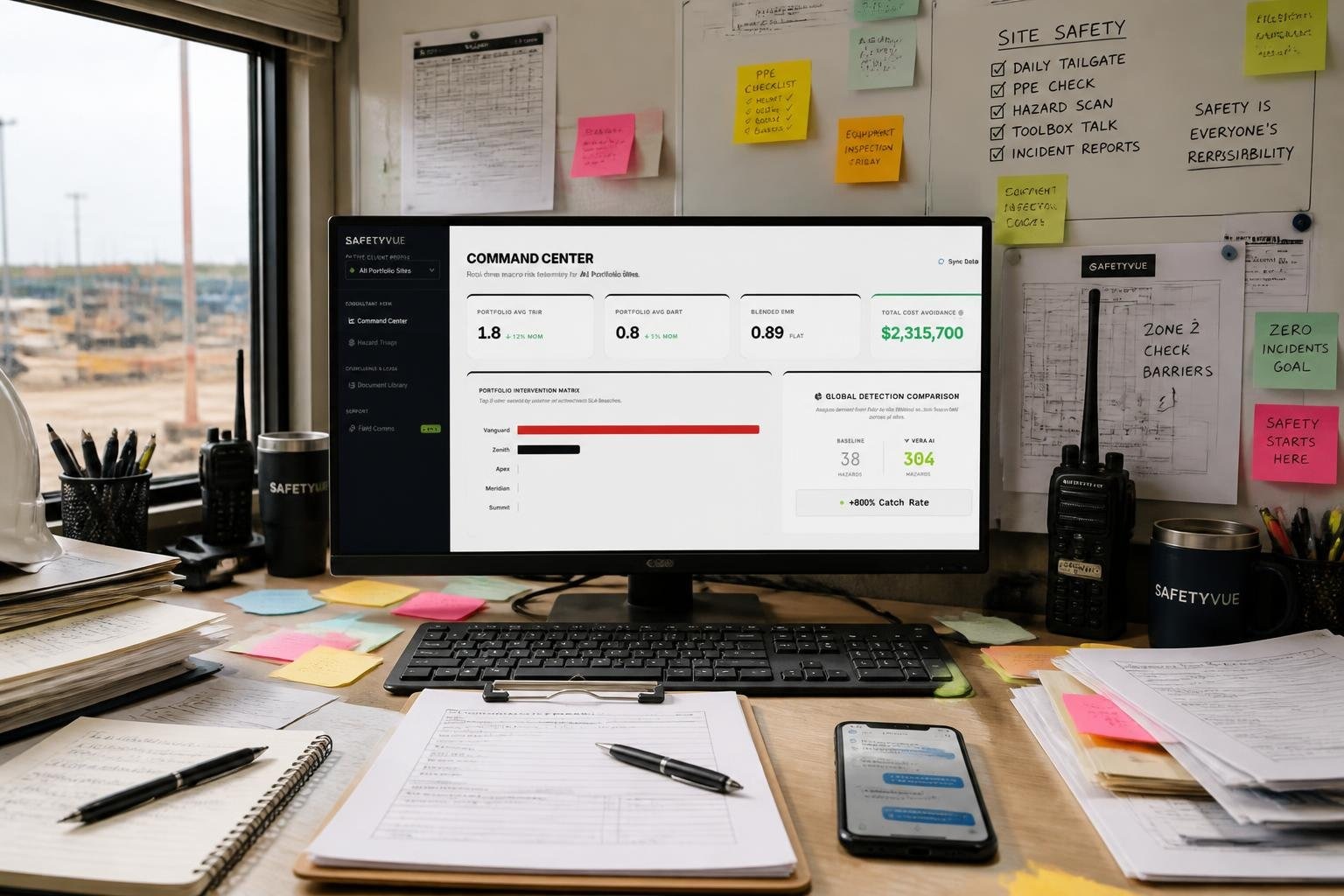
The solution is not reducing safety involvement.
The solution is clarifying accountability.
Structured workflows create defensible boundaries by clearly separating:
- Recommendations
- Operational decisions
- Corrective ownership
- Approval authority
- Documentation responsibility
This is where connected digital systems become valuable.
SafetyVue positions its platform around capturing objective “ground truth” field data while supporting human expertise instead of replacing it.
That distinction matters.
The platform helps organizations:
- Timestamp inspections
- Capture photo evidence
- Record digital signatures
- Track equipment history
- Maintain audit-ready logs
- Connect field actions to responsible parties
But operational authority still remains with the employer, supervisor, or designated competent person.
That separation helps preserve consultant role boundaries.
SafetyVue refers to this philosophy as “expert augmentation, not replacement.”
In practical terms, structured systems help ensure:
- Consultants recommend
- Employers decide
- Workers execute
- Documentation proves accountability
What Consultants Should Do to Reduce Multi-Employer Worksite Liability
1. Define Scope Clearly Before Work Begins
Consulting agreements should explicitly define:
- Advisory responsibilities
- Reporting structures
- Approval authority
- Corrective ownership
- Documentation expectations
Ambiguity creates exposure.
2. Avoid Verbal-Only Safety Direction
Verbal instructions disappear quickly after incidents.
Whenever possible, use:
- Written recommendations
- Digital reports
- Assigned corrective actions
- Structured inspection workflows
Clear records help preserve legal boundaries.
3. Separate Observation From Authorization
Consultants should avoid language that implies operational control.
Avoid phrases like:
- “Approved”
- “Cleared”
- “Authorized”
- “Proceed”
Instead, document observations and recommendations clearly.
4. Use Systems That Reinforce Accountability
Good safety systems should clarify who owns decisions.
SafetyVue’s connected workflow approach is designed to improve visibility without creating unnecessary operational overlap. The platform focuses on objective documentation, connected intelligence, and audit-ready records that help organizations demonstrate due diligence.
That distinction becomes critical during OSHA investigations and litigation.
The Future of Consultant Risk Management Is Connected Intelligence
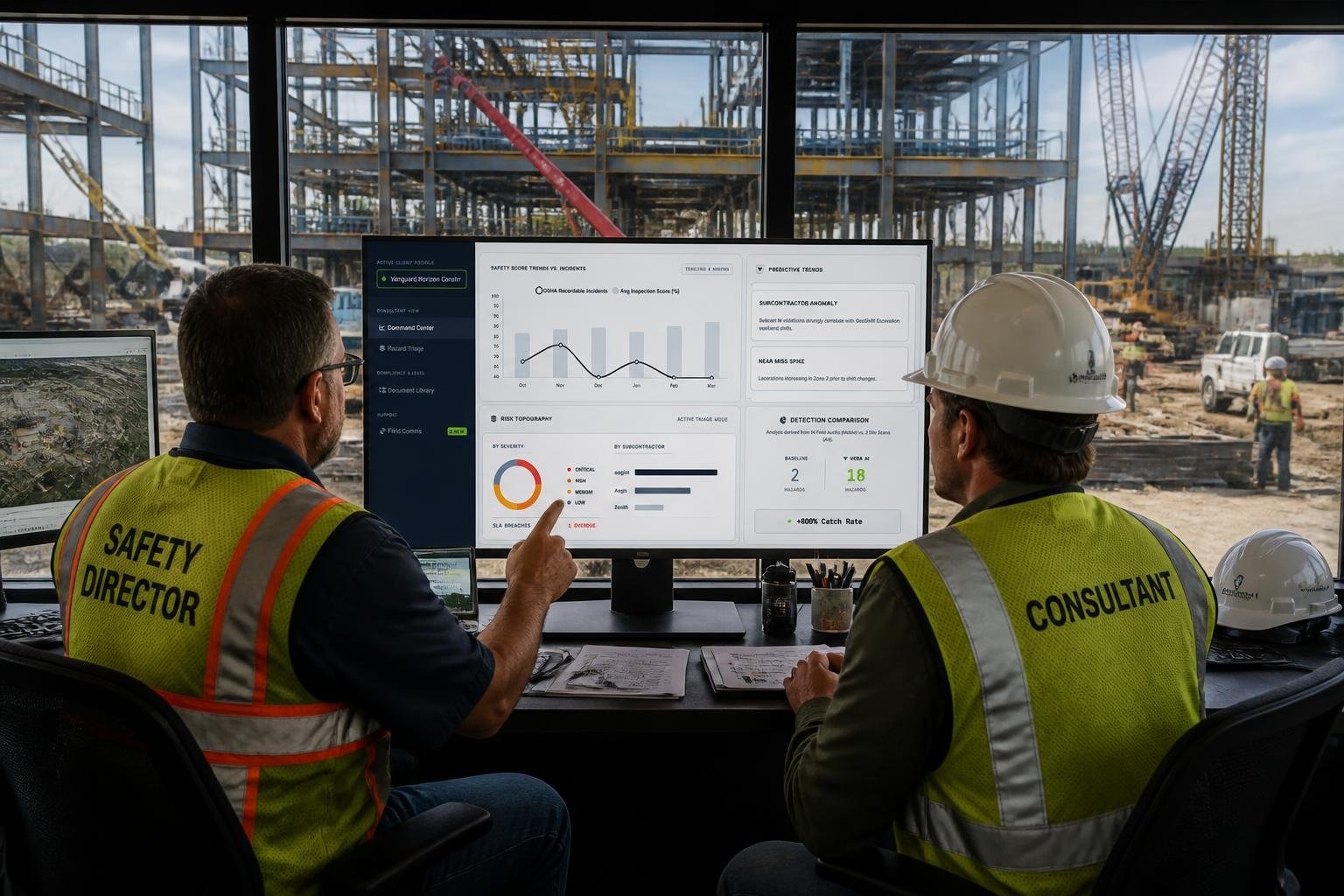
The old model of fragmented paperwork and reactive documentation is breaking down.
Regulators increasingly expect:
- Digital transparency
- Real-time accountability
- Connected records
- Verifiable field documentation
At the same time, modern jobsites involve more subcontractors, more complexity, and more overlapping responsibilities than ever before.
That means consultant liability exposure is growing.
SafetyVue’s broader industry positioning focuses on turning disconnected field data into connected operational intelligence.
For consultants, this matters because connected workflows help establish:
- Who identified the hazard
- Who owned the correction
- Who approved the work
- Who documented compliance
Clear accountability protects everyone on site.
Conclusion
Multi-employer worksite liability often expands through unclear authority, informal workflows, and weak documentation.
Most consultants do not intentionally assume controlling employer risk. They drift into it through operational ambiguity.
That is why structured workflows matter.
Clear documentation, connected records, and defined responsibilities help consultants remain advisors instead of becoming accidental controlling employers.
SafetyVue’s approach reflects this shift toward connected intelligence, objective field documentation, and expert augmentation rather than operational replacement.
As jobsites become more complex and regulatory scrutiny increases, protecting role boundaries is no longer optional.
It is part of modern risk management.
Protect Your Role Boundaries Before an Incident Happens
Download SafetyVue’s Command Control Center Playbook to learn how connected, audit-ready workflows help reduce liability exposure and create clearer accountability across complex jobsites.